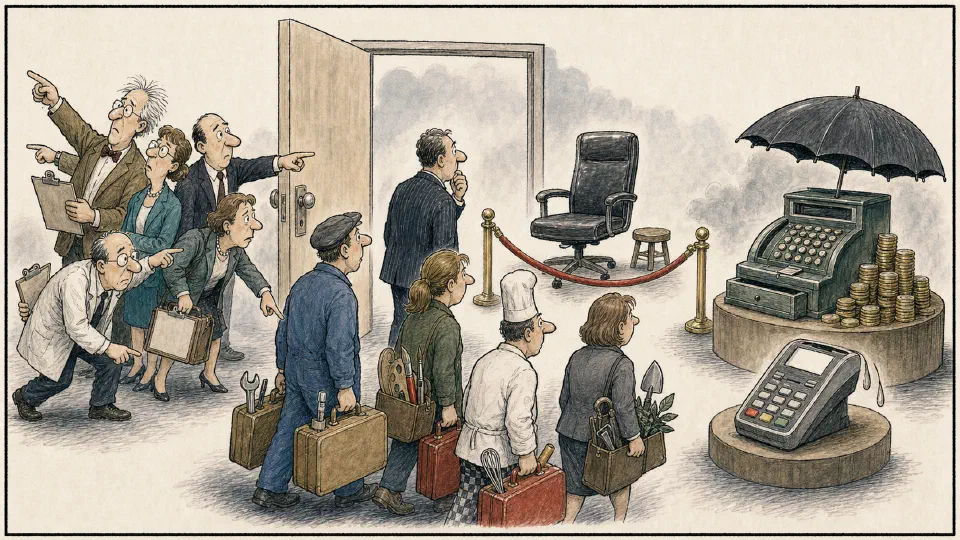
A lesson from 2016.
Most people did not expect Brexit to happen. It did. A majority was confident that Trump would not win the presidential election in America. He did. There was a strong assumption that this would cause a crash on the stock market. Shares ended 2016 at around their highest level ever. There’s nothing wrong with distrusting ‘experts.’
Promises to boardrooms.
Theresa May said in July, ‘If I’m prime minister . . . we’re going to have not just consumers represented on company boards, but employees as well.’ This was a big shift in policy and a test of determination. She emphasised in late November that there will not be a mandatory requirement for staff to have a place in the boardroom. This sounds like a dramatic change of mind. Last year’s green paper on reform of corporate governance sets out a range of options for extended scrutiny of executives’ pay and responsibilities. There must have been a lot of influential lobbying. The proposals for reform create the challenge for our prime minister of whether government can simultaneously maintain a pro-business and anti-interventionist stance while disrupting the status quo.
Confidence of workers.
The Press Association points to a new research report conducted by jobs site Glassdoor, which has found that less than a third of workers are confident in the Government’s ability to negotiate Brexit. Confidence was found to be especially low in regions where strong majorities voted to leave, including the Midlands and the North East. London also appeared particularly doubtful, with over one in four admitting they would consider leaving the UK to work in another European country after Britain withdraws from the EU, compared to a national average of one in seven.
Cash on its way out?
Cash has been around for 3,000 years. There is a lot of talk from experts that it will cease over the next few years. The Week took a close look at this topic on 17 December. Cash is no longer the main form of money. In the UK, there are 3.4 billion notes in circulation, worth around £68 billion. Yet as a proportion of the total sum held by households and corporate bodies, cash is only 3% - 97% is in bank accounts. Paradoxically, despite all the talk about the end of cash, demand has soared in recent years. The Bank of England has been printing more and more. Law abiding citizens and criminals have a common interest in the preservation of cash – convenience and anonymity. Moreover, a cashless society would give much more power to governments to track the minutiae of our lives and to police all those small transactions – such as paying babysitters and buying cannabis for personal use. It would mark an erosion of our civil liberties. There are a lot of good reasons to hang on to your cash.
Where we live.
In September 2016, there were 3.91 million 16-to-24-year-olds with jobs in the UK. 591,000 were unemployed and 2.06 million were fulltime students. The average age of retirement is 64.7 for men and 63.1 for women. The average age of managers is 45, of whom 7.6% are under 30. Most enter management in their early 30s. The average Briton will be employed by six companies and be made redundant twice during her/his career. 46% of employees in the UK will at some point completely change career.
Don’t worry.
‘Have no fear of perfection – you’ll never reach it.’ Salvador Dali, (1904-89). Spanish artist.
Keep common.
‘The war against intelligence is always waged in the name of common sense.’ Roland Barthes (1915-80). French writer, critic and teacher.