A sudden interest?
The Financial Reporting Council (FRC) has opened a debate on whether companies and their auditors should provide investors with more information about culture within organisations. In July, the FRC published its report, ‘Corporate Culture and the Role of Boards’. But what is ‘culture’? The FRC says: ‘Culture in a corporate context can be defined as a combination of the values, attitudes and behaviours manifested by a company in its operations and relations with its stakeholders. These stakeholders include shareholders, employees, customers, suppliers and the wider community and environment which are affected by a company’s conduct.’ This is a starting point. So where do FRC and the rest of us go from here?
Are we cheap?
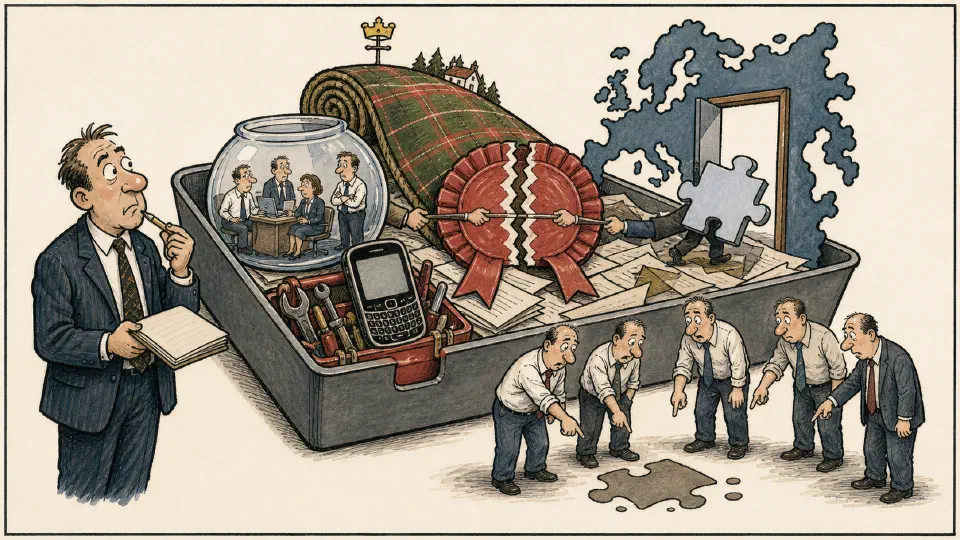
Anders Holch Povisen is a billionaire from Denmark. He buys land in the United Kingdom and now owns more land in Scotland than HM Queen. The Copenhagen Post says Mr Povisen is the principal shareholder of Bestseller, a clothing company, and now has a total of 200,000 acres. He lags behind only the Duke of Buccleuch.
The European Union (EU) grows.
The EU has accepted Bosnia’s application to join it. The country will now be assessed on whether it meets certain criteria on human rights and the rule of law.
Jeremy Corbyn, MP for Islington North
was re-elected with a larger majority as leader of the Labour Party. The Economist says the bulk of his support came from members who joined after 2015’s general election. The unexpected result at 61.8% of votes will not overcome the Party’s divisions. John McDonnell, MP for Hayes and Harlington and Shadow Chancellor, promised to bring socialism back into the mainstream. This is unlikely to be popular with the electorate.
An addiction gone.
BlackBerry has announced that it will cease to design and produce smartphones. Instead, development will be outsourced to other companies. This will allow BlackBerry to focus on software and services. It shaped the emergent industry of fifteen years ago, but quickly fell behind rivals. BlackBerry now has less than 1% of global sales.
Sting in the Tale.
This is a story about four people named Everybody, Somebody, Anybody and Nobody. There was an important job to be done and Everybody was sure that Somebody would do it. Anybody could have done it but Nobody did.
Somebody got angry about that, because it was Everybody’s job. Everybody thought Anybody would do it, but Nobody realised that Everybody wouldn’t do it. So, Everybody blamed Somebody when Nobody did what Anybody could have done!
Graffiti
‘Egotists do not talk about other people.’