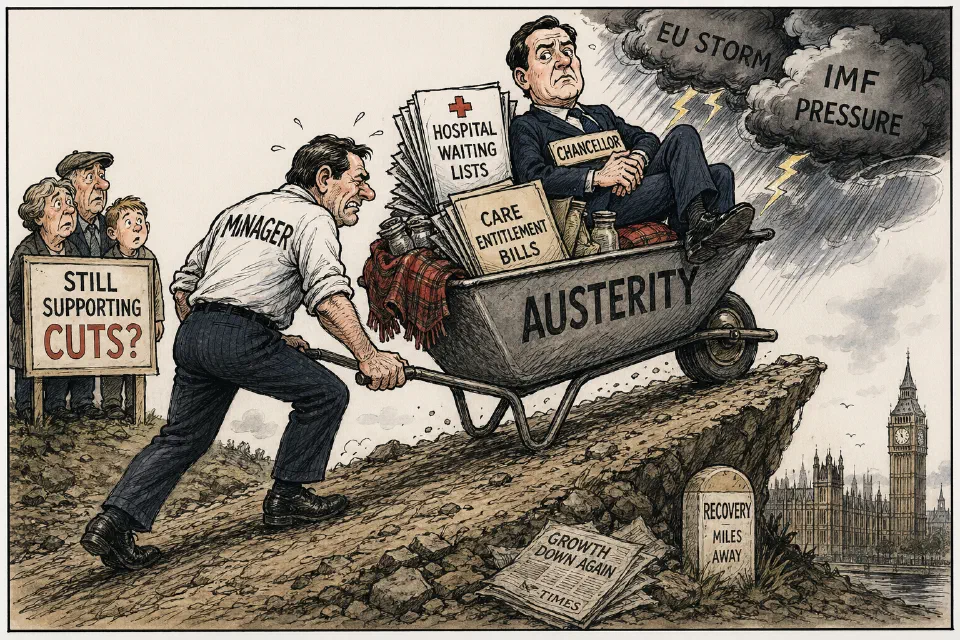
The coalition government seems to have retained most voters’ support for continuing the severe cuts in public expenditure.
Yet we are only in the first year of austerity. It does not feel good. Lower entitlements to care and longer waiting lists in hospitals appear to gather pace. The UK’s economy has not required intervention from the International Monetary Fund or the European Union to deliver a rigorous programme. Maybe the chancellor has been fortunate? Events elsewhere have damaged economic growth and costs, but they have made Plan A look mostly unavoidable. This month’s budget will tell us whether George Osborne has any intentions to change direction. It’s unlikely.
China’s city dwellers now outnumber its rural residents.
According to government’s figures, 51.3% of the country’s 1.35 billion people lived in urban areas at the end of last year. This is low for an economy at its stage of development, says The Economist. America reached this milestone before 1920; the urbanites are now 90% of the total. Britain passed the 90% mark in the 19th century. India is expected to reach it by 2045.
Investors are realising slowly what is happening in the western world.
Emerging markets offer greater security and now higher yields. With younger populations, smaller governments, less welfare and lower taxes, they grow faster. The question is unlikely to be how much money you want to have in Brazil, Russia, India, China et al, but why leave any in the developed countries? We have a lot to do.
A consumer:
- is no longer average – polarisation in spending power is increasing. The gap is set to widen between rich and poor consumers
- buys on price – research suggests that more than 70% of customers actively look out for price-based promotions
- picks up the telephone – s/he is no longer diffident about making complaints. Assertive purchasers make their opinions heard
- still switches – satisfaction does not mean loyalty. Up to 85% of switchers report satisfaction with their suppliers. They jump just the same
- prefers plastic – there are constant increases over each previous year. And is moving rapidly online
- calls the shots – consumers do not have to come to you. Technology allows competitors to copy innovations cheaply and quickly
A survey shows that line managers handle issues on managing people which were the preserve of human resources departments.
41% say line managers have sole responsibility for coaching, counselling and mentoring employees, compared with 11% of human resources managers. 43% assert they deal with appraisal on their own, with 9% of human resources managers having similar discretion. All this is good news. It is recognised generally that successful trading demands an adaptable and flexible workforce. The survey revealed a major gap between support for various policies and their implementation. For example, 75% of employers endorsed training in skills. However, fewer than 50% analysed training needs or used processes for developing managers. Only 66% appraised their staff. Corrective action is not difficult, but overt support from senior managers is the essential starting point.
Last word.
‘It’s discouraging to think how many people are shocked by honesty and how few by deceit.’ Noel Coward, quoted in the Associated Press and Money Week.