More figures.
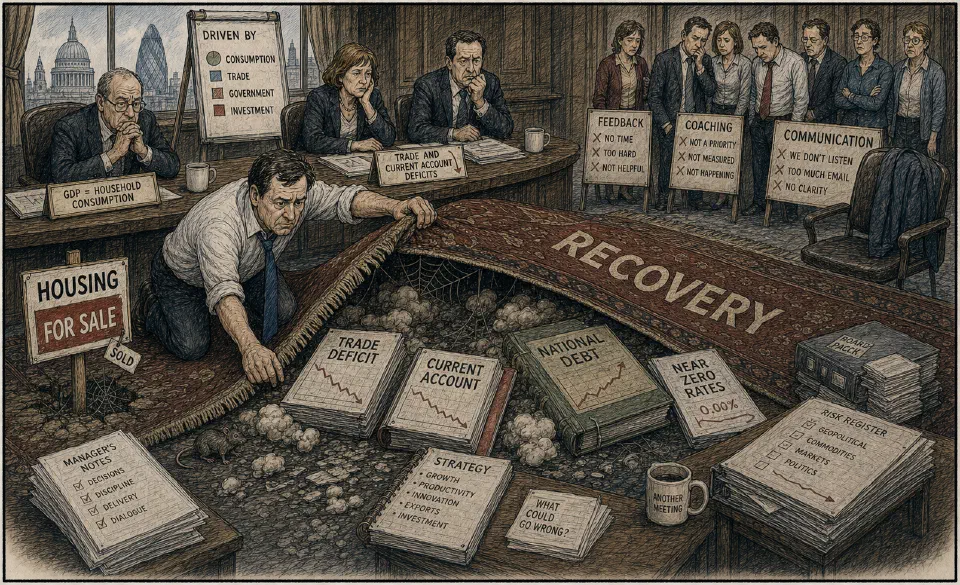
John Ashcroft made a shrewd observation in The Saturday Economist (28 May). The Office of National Statistics released the second estimate of Gross Domestic Product last week. The overall figure is largely unchanged with 2% growth year-on-year. Household consumption is still driving the UK’s recovery with spending up 2.6%. Investment increased by 1.1%. The trade figures (imports and exports) continue to disappoint. Most analysts expect growth of just 2% for 2016. The trade deficit (imports in excess of exports) and the current account deficit (difference between the nation’s savings and investment) are the country’s major problems. This is not a time to take risks with flows of capital, international confidence and foreign direct investment..
The national debt.
Our Chancellor’s promise to reduce the UK’s national debt has gone wrong. It continues to go up. There are three ways out of this trap. Two of them are out of the question. The first option is to pay it back by outgrowing it. This is not available right now. We cannot hope to have sufficient growth to get rid of such a large debt. The second possibility is to default. This would end the financial system and is unthinkable for a major economy. So, it will not happen. Government wants inflation.
Interest rates
have been at near-zero for more than seven years. Not many people benefit from this policy. Pensioners reduce expenditure and young people are discouraged from saving. Paul Kupiec pointed out in The Wall Street Journal that low rates stimulate risky investments to chase higher returns and they do not boost economic growth.
Houses on the move.
Registrations of sales went down by 46% in May. ThisIsMoney.co.uk noted that the average price of a residential property reached £234,069 in April. Now there is a reduction is demand. This is partly due to buy-to-let investors pulling out of the market after the surcharge on stamp duty came into effect. There are fears associated with the impact of a possible ‘leave’ vote in the referendum on the European Union. Sellers will have to be more realistic with asking prices and lenders might refuse to authorise high loan-to-value mortgages. Many British buyers of holiday homes in the European Union have asked for a ‘Brexit clause’. This will allow them to withdraw if the referendum leads to edginess in the market.
Managers could do better.
The Chartered Institute of Personnel and Development’s research points to issues for managerial action. Giving feedback is a weakness. Only 41% of the employees said their line manager always or usually gives them feedback. We cannot expect someone to keep doing a good job if s/he does not know what ‘a good job’ looks like. 25% of the participants said their boss never coaches them at work. Just 9% replied they always do. More than half (53%) recorded that their line manager only sometimes, rarely or never keeps them in the loop about what’s going on. This weakness on communication can leave employees feeling alienated. Little more than half of the respondents said their manager could always or usually be relied upon to keep her/his promises. 18% reported that their boss never or seldom treats them fairly. Conclusions of this kind deserve attention.
Ouch!
‘Leadership is like rugby. It requires you to put your head where it hurts.’ Mark Evans, chief marketing and communications officer at Direct Line Group.
It’s good to know.
‘The purpose of studying economics is not to acquire a set of ready-made answers to economic questions, but to learn how to avoid being deceived by economists.’ Economist Joan Robinson, quoted in a newsletter from PFP Wealth Management and in MoneyWeek (3 June 2016).