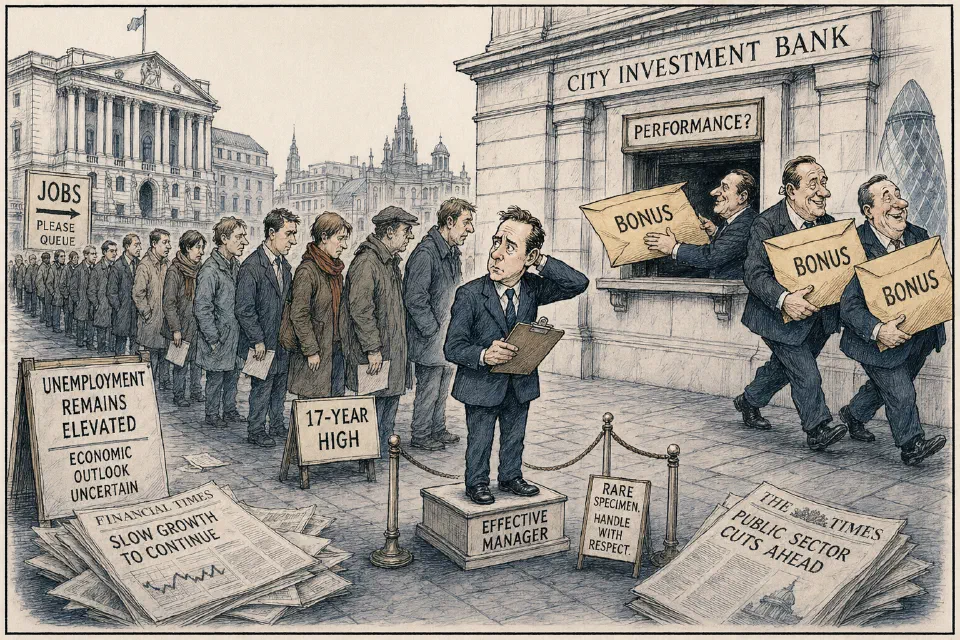
The Government’s figures reveal unemployment at a 17-year high
of more than 2.5 million. A survey of 533 bankers in the City found that 28% of respondents expect bonuses to drop. One in ten predicts her/his payment will rise by 70% or more. The Centre for Economic and Social Research forecasts that City-based firms will give bonuses totalling £7.2 billion. These amounts are difficult to defend when they seem out of touch with either performance or the rest of our economy. Even Mervyn King, governor of the Bank of England, has argued gently that Project Merlin’s targets overstate the banks’ support. This is because of a focus on the amount of cash they ‘make available’, rather than emphasising the total of loans. All this is at a time when HM Treasury (the taxpayer) has had to take additional steps to fill the shortfall in lendings. And ‘we are all in it together’ insists the prime minister. The political result may well be more unwanted and unwise regulations.
A return to the books and essays of Peter Drucker always refreshes the mind and puts issues into perspective
Your correspondent has been dipping into ‘The Effective Executive’ again. The five essential practices are still good sense:
- concentrate on the two or three tasks that if done well will really make a difference to the business
- make sure your priorities are understood. Compile a list of all the people on whom you depend and who depend upon you. Assess your priorities with each of them
- build on your own strengths. Whenever you make a key decision or take action, write down the expected outcomes and check them a month or a year later
- take responsibility for your information and your relationships. Think through what knowledge you need and what information you owe to others
- place people where their assets can produce the best results.
Many companies work hard at differentiating and customising their ‘products’
But they see services as associated with the product and fixed. Businesses typically :
- add layer upon layer of services, but rarely assess, benchmark, integrate or remove them
- deliver more extras to customers than they want or need
- do not know what services particular buyers or prospects wish to receive, how much they would pay, or what it would cost the business to supply them
- do not distinguish between services as part of the product’s offering or as optional additions
- do not control gratuitous use of additions to close a sale, even though this might reduce the profitability of a customer to the company.
Managers in the UK lack confidence and a sense of responsibility as a result of constant change,
said Kevin Thomson (Emotional Capital: Capstone). Research is completed jointly by the Marketing and Communication Agency (MCA) and MORI showed that the loyalty to many businesses has been depleted by repeated reorganisations. Thomson reckoned poorly managed change can undermine the hidden resources of feelings, values and perceptions that determine whether people use their abilities constructively and support corporate goals. The survey from MCA/MORI estimated that almost half of this country’s managers feel little obligation to their employers. Yet change must be our natural habit. There is much work to do.
Context
‘China is now the second-largest world economy – but on a per-capita GDP basis it is 103rd, barely ahead of El Salvador.’ The Enterprise blog, 16 August 2010.