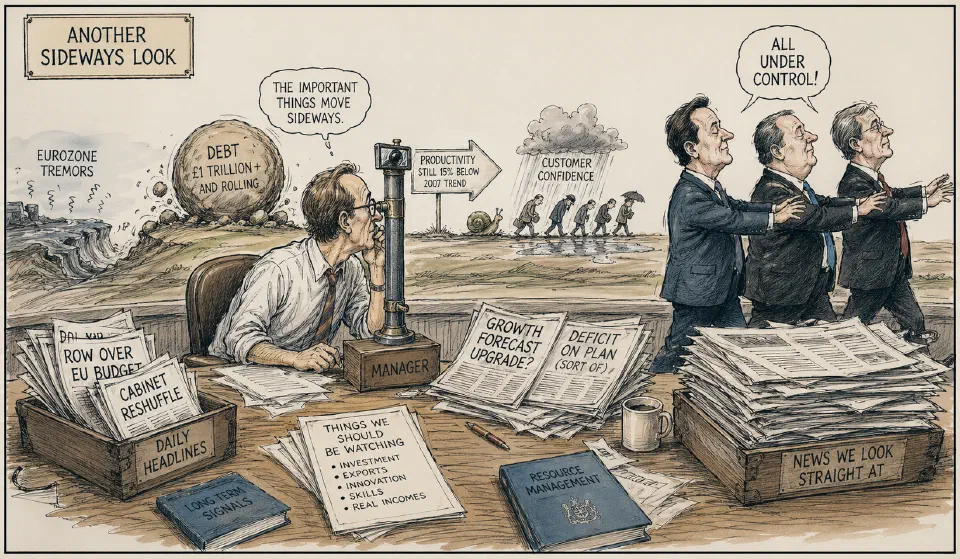
Mark Carney will soon be governor of the Bank of England.
He moves amid praise for his work at the Bank of Canada. Have you noticed the signs that its economy is coming unstuck? Growth came to a halt in the second half of 2012. The property market looks sick. Moody’s has downgraded several banks. Debt in Canada as a percentage of households’ income is above the United States and this country and is still rising. Government debt at 83% of gross domestic product (GDP) is higher than in Britain. Is it possible that Mr Carney has that special skill of getting out just in time?
In 2011/12 the UK’s government had a total budget of around £700bn.
£200bn was expenditure on welfare (including pensions and tax credits). The Department for Work and Pensions (DWP) was easily the biggest user of monies with £159bn on pensions and benefits. Of this sum, £74bn went on state pensions. The major outlays on benefits were the pension credit and minimum income guarantee (£8.1bn), disability living allowance (£12.6bn) and housing benefit (£16.9bn). Jobseeker’s allowance is a relatively small figure at £4.9bn, a bit more than council tax benefit. An additional £42bn is paid out through HM Revenue and Customs - £12.2bn in child benefit and £30bn in personal tax credits. Attitudes towards benefits seem to have hardened in recent years. There have been several relevant surveys; for example, British Social Attitudes (2003/2011) and NatCen Social Research.
Leadership same as management?
Well, not quite. They overlap and sometimes come to mean much the same thing. Leadership has distinctive nuances not found in management. It implies a sense of direction, teamwork, inspiration, example and acceptance by others. Management has overtones, too. These embrace a belief in systems and scientific method, a stress on planning, monitoring and controlling, and a concentration on administration.
Both concepts have blindspots. Over-reliance on one or the other can bring failure. ‘Good’ management is the constant need, although sometimes there are too many managers. Leadership is the essential ingredient for stimulating change as an enjoyable way of life in a business. As John Adair says, ‘Management is prose; leadership is poetry’.
You have paid the wage bill …
Now consider other employment costs – canteen, cars, personal and medical insurances, occupancy space, waiting time, downtime, teabreaks and so on. Have you isolated the reasons for variances between time available for work, time worked and time on output or provision of service? Do you know the facts? They are necessary for calculations associated with reviews of salaries and wages and measurement of productivity. In most companies, the basic issues are managers’ commitment and competence to organise all resources for more effective, not harder, work.
Room below stairs.
The first systematic census of population for Britain was in 1910. It defined lower middle class as the family which could not afford more than three servants. In 1913, servants were the largest single group of employees in every developed country. Thirty percent of all wage earners in Britain were domestic servants. They have all gone, after being around for over a thousand years. Quite a trauma and we recovered from it!
Correct.
‘My grandfather once told me that there are two kinds of people: those who do the work and those who take the credit. He told me to try to be in the first group; there is much less competition.’ Indira Gandhi, quoted on Forbes.com.