We’ve suspected this reality.
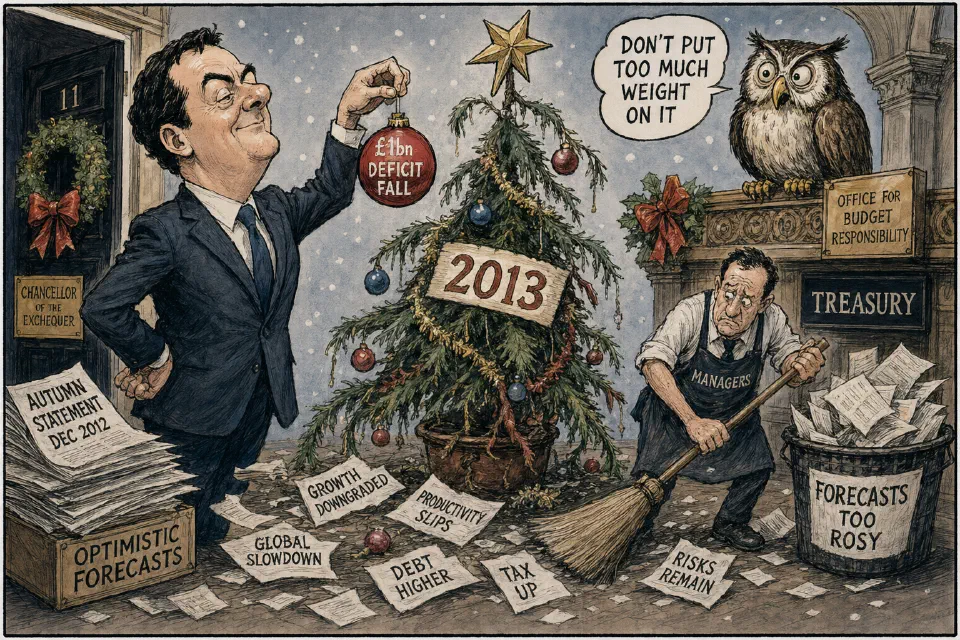
The Office for Budget Responsibility (OBR) has said it would be an error to put too much emphasis on its estimate of whether borrowing by Government would rise or fall in 2012/13. The Chancellor showed pleasure that OBR’s forecast suggested the deficit would fall by £1 billion this financial year. Many analysts have been predicting the opposite. Robert Chote told the House of Commons’ Treasury Select Committee that, ‘Putting a lot of weight on a forecast that borrowing is going to fall, or indeed rise by £1 billion between one year and the next is ignoring the uncertainty. The average mistake for the budget’s deficit one year ahead is about £15 billion to £16 billion, so I think the best conclusion is that borrowing is expected, on an underlying basis, to be broadly the same this year as it was last year.’ We learn again that trends are the manager’s key factor.
Data, data, data. And what you do with it.
The Chartered Institute of Marketing has pointed out that the importance of mining data was illustrated by President Obama’s election campaigners. They used rigorous analytical methods to send personalised communications and identify new voters. This type of nano-targeting is becoming quickly an essential part of corporate strategy, as businesses apply digital analytics to huge volumes of data.
The shift is turning old models upside down and disruptive operators are emerging to offer proposals which provide unusual (for the time being) insights on existing and potential customers.
But get the ‘mix’ right.
All of one becomes counter-productive.
- What gets measured gets done - but measure the critical few, avoid the many - when it’s broken, fix it fast.
- What gets budgeted gets done.
- What gets applauded gets done.
- What gets rewarded gets done - praise pays, but it does not pay the mortgage - watch out for the middle stealing the idea.
- What gets reprimanded gets done - keep your cool.
Ways to tell your boss some home truths:
- Speak to him/her alone, not in front of other people
- Know what you are talking about and stick to the facts
- If something is bothering you, don’t rush to criticise. Instead…
- …sleep on it, to avoid saying too much in the heat of the moment
- Know your boundaries
- Don’t make it personal
- Use examples to support your points
- Be as positive as you can. Avoid making it all negative
- Whatever you do, don’t moan, whinge or whine
- Ask for some feedback in return
Thanks to Management Today, December 2012.
An important lesson.
‘Investors need to understand not only the magic of compounding long-term returns, but the tyranny of compounding costs.’ Jack Bogle, American fund manager, quoted in The Economist.
Good wishes for a joyous festive season and a healthy 2013.