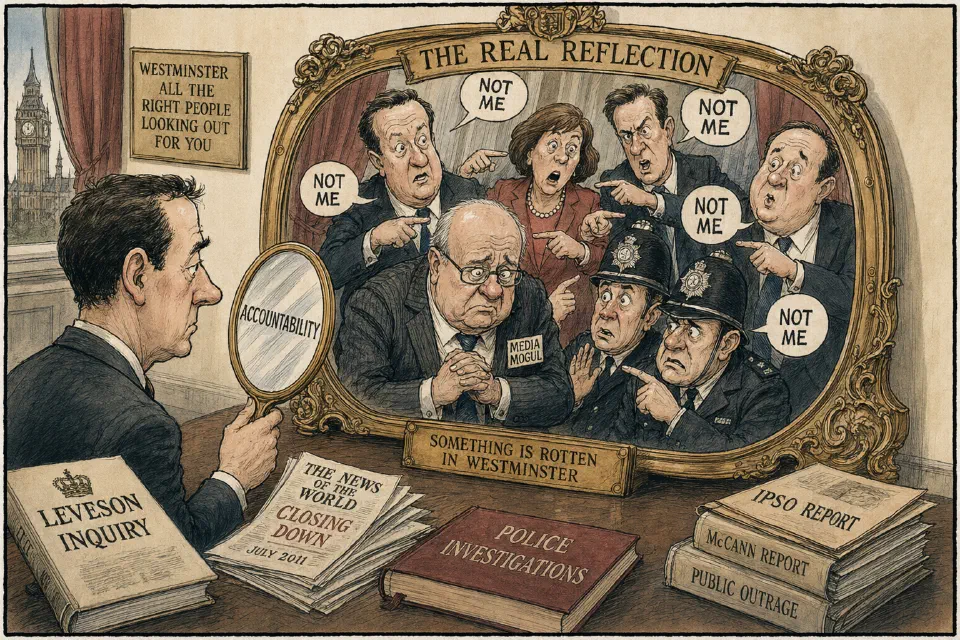
The Murdoch mysteries have caused unusual agreement inside the Establishment
Each participant would have acted differently in hindsight. However, no one admitted blame. Many questions remain to be answered by the criminal investigation and judicial inquiry. One thing is certain. A media mogul can be tamed, eventually, by parliament. But police officers who can be bribed are indicative of a corrupt state.
The newspapers, magazines, TV presenters, commentators on radio and enewsletters
have announced with solemnity that professional politicians in the Senate have done an historic deal for the US’s citizens. They have crossed floors, grasped hands and slapped backs. This squabbling group reckons it has saved the world. And America’s economy goes weaker. Its Commerce Department said a week ago that the economy contracted by 5.1% between the fourth quarter of 2007 and the second quarter of 2009. The previous estimate was 4.1%. This is the most severe recession since the end of WW2. And so we go on. Bill Bonner asserts that the real story is worse. Almost all the ‘growth’ since 2007 is the result of US government’s transfer payments. The private sector remains on the downward track. President G W Bush started the big spend. His successor took a long time to acknowledge reality. Are we watching an empire on the way down?
Political power around the world is shifting to the cities
The sociologist Saskia Sassen eighteen years ago listed three – London, New York and Tokyo – with distinctive standards. She says there are now forty such conurbations and a new ‘global urban culture’. Jet-setting urbanites of the world’s ‘huge megalopises’ are more connected to each other economically, socially and politically than to the poor who live across town or to their counterparts in rural areas. City-based politicians have started to band together, strike trade deals and lobby for their mutual interests. These alliances go beyond the traditional photo-opportunity and proclamations of sister city. Some even speak of creating a collective foreign policy that might chip away at national authority. Last year, Barcelona’s mayor urged the United Nations to grant cities an official part in its policy-making and several European counterparts are exerting similar pressure on the European Union. Given the new understanding that if a city is thriving it can make an entire region healthy, they may be successful.
Observers detached from the emotions and consequences of making decisions
tell managers (of whichever title) that everything is easy really - delegate, delegate and delegate. But there are times when it is plainly wrong to give someone else the authority to do something.
- Crisis: the manager has to be out front and visible.
- People: s/he must not shirk the nasty job of a reprimand or dismissal.
- Sudden change: if things are being altered, be on call to explain anything to anybody.
- Major decisions: s/he must make them; the choice between two strategies for the business is not for delegation.
- Ceremonies: the manager’s absence at crucial moments can be seen as a deliberate insult.
Ask most people which is the dominant language on our planet and they will reply that it’s Chinese or English or Spanish.
They are wrong. Binary is now dominant, with computers and machines having more conversations every working day than a total of mankind since the birth of Eve.