Carney’s cut.
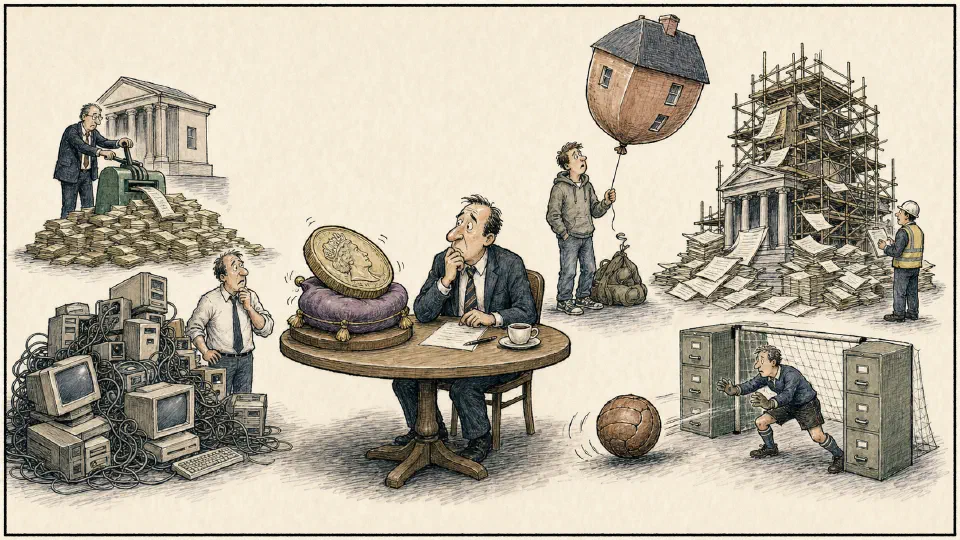
The Bank of England recently reduced its interest rate to an historic low of 0.25%. This is the first change since height of the financial crisis in 2009. Governor, Mark Carney, said the action was needed to ‘cushion’ the impact of the decision to leave the European Union (Brexit) and avert recession. He announced also a £60 billion increase in the Bank’s programme of ‘quantitative easing’ to pump more money into the economy, and the creation of a new £100 billion fund to encourage cheaper lending by commercial banks. These plans confirm the view of most economists that Brexit has hit the economy hard. The Times said ‘the Bank has very limited ability to compensate for this’. Mr Carney insisted Britain can ‘handle’ these difficulties.
UK and information technology.
Helen Margetts (University of Oxford) points out that the Government’s use of IT has lagged behind other countries until recently. Low penetration of digitised services made them expensive and inefficient. They were often handicapped by complex legacies of networks and systems. Some of them went back to the 1970s. Installation of long-promised ‘digital era government’ became mixed in a series of large projects. They were huge in terms of cost, scope and timescale and bigger than any others throughout the world. These ventures were delivered by the same handful of computer consulting firms that rarely saw challenges to their hold on publicly-funded contracts. Departmental silos in the civil service and local authorities ensured there were few economies of scale and the failures of shared services. HM Treasury negotiated with departments individually for their expenditures on IT. There is evidence of some lessons being learned.
Economic trends shaping society
Many developing countries are experiencing a rise in total employment. In most cases this is explained by the growing number of women in the workforces. Increases in credit and debt reduce confidence. There is a feeling the world could soon face another financial crisis. One sign is the Bank of England has a target at 2% for inflation. There is not any, despite the fact that some inflation is good for us. There is a boom in transportation – railways and airways grew globally in 2015. Sales of motor vehicles continue to rise. Another key trend is increasing poverty of young adults. And housing is a major issue for this group. The higher number of low-paid jobs has led to additional claims for welfare benefits and challenges to the government’s aims to reduce expenditure. Politicians are giving priorities to the needs of older people to reduce outgoings. Are young people paying the price? Will inequality widen?
Boom and bust for UK’s universities?
The removal of controls on the number of admissions to each university in England has caused a scramble for students from both home and abroad. Retention of market share is a major factor. This country’s decision to leave the European Union will pour doubt upon the strategy. A report from the Russell Group of universities says its 24 members planned to invest £9 billion between 2012 – 13 and 2016 – 17 on building projects. The Higher Education Statistics Agency (HESA) has revealed that around £3.7 billion was spent in 2014 – 15 by British higher education institutions. Of course, some were entering a beauty contest to avoid being rejected as an ugly duckling.
The Association of Directors of Estate found that 67% of prospective students viewed facilities as crucial when choosing where to study. Universities are funding these expenditures through various sources, including accumulated surpluses, bank loans, public bonds, partnerships and donations. Kerry Barker points to a shift to debt. Demographics and our decision to leave the European Union (Brexit) bring more risk to the managerial table. The availability of 18-year-olds is going down and will continue to do so for several years. There are fewer students to go round. Also, bear in mind the doubts about the recruitment of students from the European Union. The UK Council for International Student Affairs estimated there were 107,925 full-time, non-UK EU students in the UK’s higher education in 2014 – 15. This would yield an income in the order of £1 billion a year. There are worrying signs that students from the EU will regard post-Brexit Britain as a less attractive place. There is room for innovation and marketing.
Five lessons from last season’s soccer
- seize upon competitors’ weaknesses
- break from conventional wisdom
- money does not buy success
- employ older and experienced workers
- and never give up.
Even if you are not successful immediately, keep plugging away.
Been there.
‘The single biggest problem in communication is the illusion that it has taken place.’ George Bernard Shaw , 1856 - 1950. Irish dramatist and critic. Nobel Prize winner.